Morse Code Alphabet A to Z: The Complete Beginner's Learning Guide
You do not need to be a radio operator to learn Morse code. You do not need special equipment. You do not need weeks of study. What you need is the right method. Most people use the wrong one. This guide gives you the right one built around sound, rhythm, and smart daily practice.
By the end of this guide, you will know the full A to Z alphabet, understand how the system works, and have a clear daily plan to make it stick permanently.
You can practice spelling out these letters instantly using our Morse Code Translators tool.
What Exactly Is the Morse Code Alphabet?
Morse code is a communication system that converts every letter of the alphabet into a unique signal pattern. That pattern travels through sound, light, radio waves, or physical tapping.
It does not require a shared spoken language. It does not require electricity in many situations. It just requires two things: a sender who knows the patterns and a receiver who knows them too.
A dot is a short signal lasting one unit of time. When spoken aloud, it sounds like "di."
A dash is a long signal lasting three units of time. When spoken aloud, it sounds like "DAH."
Spacing holds everything together. The pause between dots and dashes within one letter is one unit. The pause between two separate letters is three units. This structure keeps every message clean and readable even in noisy environments.
Every letter from A to Z has one fixed pattern. It never changes. A is always dot-dash. S is always dot-dot-dot. O is always dash-dash-dash. That consistency is exactly what makes Morse code so reliable across 150 years of communication history.
After you memorize these characters, the next step is to learn the patterns for Morse code numbers.
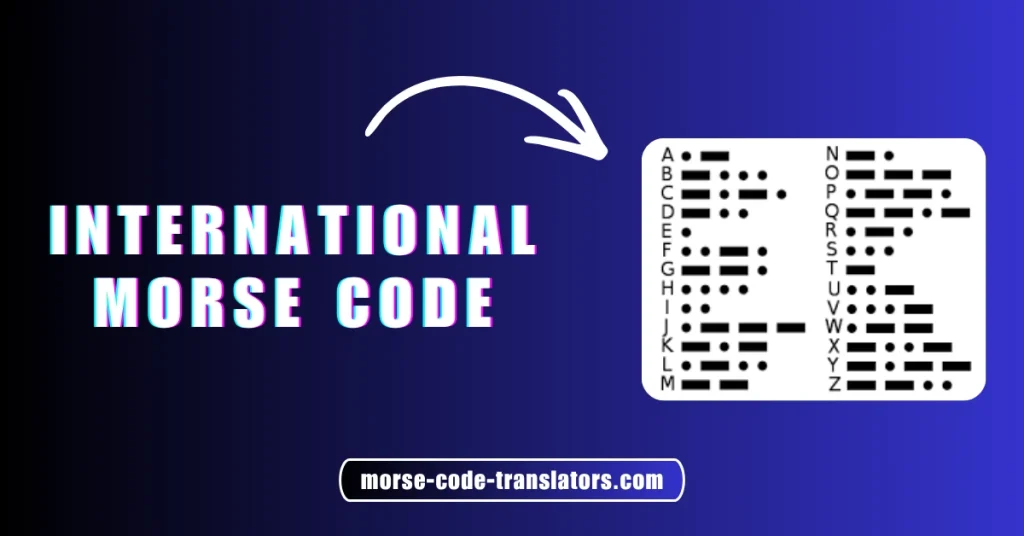
Full Morse Code Alphabet A to Z Reference Chart
Use this chart while you practice. Do not try to memorise it by reading. Use it as a follow-along tool while you listen.
Complete A to Z Pattern and Sound Table
Letter | Pattern | Sound |
A | · — | di-DAH |
B | — · · · | DAH-di-di-di |
C | — · — · | DAH-di-DAH-di |
D | — · · | DAH-di-di |
E | · | di |
F | · · — · | di-di-DAH-di |
G | — — · | DAH-DAH-di |
H | · · · · | di-di-di-di |
I | · · | di-di |
J | · — — — | di-DAH-DAH-DAH |
K | — · — | DAH-di-DAH |
L | · — · · | di-DAH-di-di |
M | — — | DAH-DAH |
N | — · | DAH-di |
O | — — — | DAH-DAH-DAH |
P | · — — · | di-DAH-DAH-di |
Q | — — · — | DAH-DAH-di-DAH |
R | · — · | di-DAH-di |
S | · · · | di-di-di |
T | — | DAH |
U | · · — | di-di-DAH |
V | · · · — | di-di-di-DAH |
W | · — — | di-DAH-DAH |
X | — · · — | DAH-di-di-DAH |
Y | — · — — | DAH-di-DAH-DAH |
Z | — — · · | DAH-DAH-di-di |
How to Actually Use This Chart
Most beginners open a chart like this and try to memorise every row. That is the wrong approach. Use the sound column, the third column, as your starting point. Ignore the dot-dash pattern at first. Just read the sound out loud. Say di-DAH for A. Say di-di-di for S. Say DAH-DAH-DAH for O.
Once the sounds feel natural, use the pattern column to check your understanding. The chart is a support tool, not a memorisation target.
This chart follows the strict spacing and timing rules of international Morse code.
The Hidden Logic That Makes Morse Code Easy to Understand
Morse code was engineered with one goal: efficiency. Nothing in the system is accidental.
The Most Used Letters Got the Shortest Codes
Samuel Morse and Alfred Vail studied which letters appeared most often in English text. The most common letters got the shortest signal patterns.
- E the most common letter in English is just one dot. One short beep.
- T the second most common is just one dash. One long beep.
- A and N are both two signals. I and M are both two signals.
Every extra signal costs transmission time. So the most used letters were made as fast as possible to send.
Rare Letters Got Longer Codes
Letters like Q, X, Y, and Z barely appear in everyday English. So they received longer four-signal patterns. A pilot sending a message uses E and T hundreds of times. They might use Q or Z a handful of times. The extra signal length for rare letters is a small price worth paying.
Why This Logic Helps You Learn Faster
When you understand the design logic, the system stops feeling random. Short signals mean common letters. Long signals mean rare letters. Start your learning with the short ones. Build toward the long ones. The structure of the system itself becomes your learning roadmap.
Forget the method you were probably planning to use. Staring at a dot-dash chart and trying to memorise rows of symbols is slow, frustrating, and ineffective.
Your Brain Remembers Sound Better Than Symbols
Think about songs you have not heard in ten years. You can still sing them. Think about a phone number you read once. It is gone. Sound-based memory is deeper and more durable than visual memory. Your brain is wired to hold onto rhythms and patterns far longer than it holds onto images.
Morse code is a sound system pretending to be a visual one. The dots and dashes are just written representations of sounds. The real code lives in your ears, not on the page.
The One Rule That Changes Everything
- Every time you see a dot, say “di” out loud. Short and sharp.
- Every time you see a dash, say “DAH” out loud. Long and strong.
Never count dots and dashes. Never think “three dots equals S.” Think di-di-di and let S appear in your mind automatically. That shift from counting to hearing is the moment learning accelerates.
Treat Every Letter Like a Song Lyric
You do not analyse music while you listen to it. You just hear the pattern and recognise it. That automatic recognition is your goal with Morse code.
- A has a two-beat rhythm di-DAH. Short then long.
- S has a three-beat rhythm di-di-di. Three quick beats.
- O has a three-beat rhythm DAH-DAH-DAH. Three slow beats.
SOS, the most famous Morse signal in the world, goes di-di-di DAH-DAH-DAH di-di-di. Say it out loud three times right now. You just learned your first word in under thirty seconds.
Start Decoding in Three Steps Right Now
You do not need equipment. You do not need an app. You need sixty seconds.
- Step one: pick the letter E. Say di five times out loud. Di. Di. Di. Di. Di.
- Step two: pick the letter T. Say DAH five times out loud. DAH. DAH. DAH. DAH. DAH.
- Step three: combine them. E is di. T is DAH. Now you know two letters from pure sound memory.
That is the foundation. Every other letter builds on it the same way.
Learn Morse Code A to Z in Easy Groups
Never try to learn all 26 letters at once. Learning in small groups is faster and less confusing.
Beginner Group (1–2 Signals)
Start with these simple and common letters. They are quick to learn.
E = di (one short sound)
T = DAH (one long sound)
A = di-DAH (short then long)
N = DAH-di (long then short)
I = di-di (two short sounds)
M = DAH-DAH (two long sounds)
These letters come in pairs. A and N are opposites. E and T are opposites. I and M are opposites. Learning in pairs makes it easier and faster. Practice these until you can recognize them by sound without thinking.
Intermediate Group (3 Signals)
Once the first group feels easy, move to these letters.
S = di-di-di
O = DAH-DAH-DAH
U = di-di-DAH
R = di-DAH-di
D = DAH-di-di
G = DAH-DAH-di
W = di-DAH-DAH
K = DAH-di-DAH
S and O together make SOS, which is very important to remember. This group may feel harder, but your rhythm skills will improve quickly.
Advanced Group (4 Signals)
Learn these last. Take your time and go slow.
B = DAH-di-di-di
C = DAH-di-DAH-di
F = di-di-DAH-di
H = di-di-di-di
J = di-DAH-DAH-DAH
L = di-DAH-di-di
P = di-DAH-DAH-di
Q = DAH-DAH-di-DAH
V = di-di-di-DAH
X = DAH-di-di-DAH
Y = DAH-di-DAH-DAH
Z = DAH-DAH-di-di
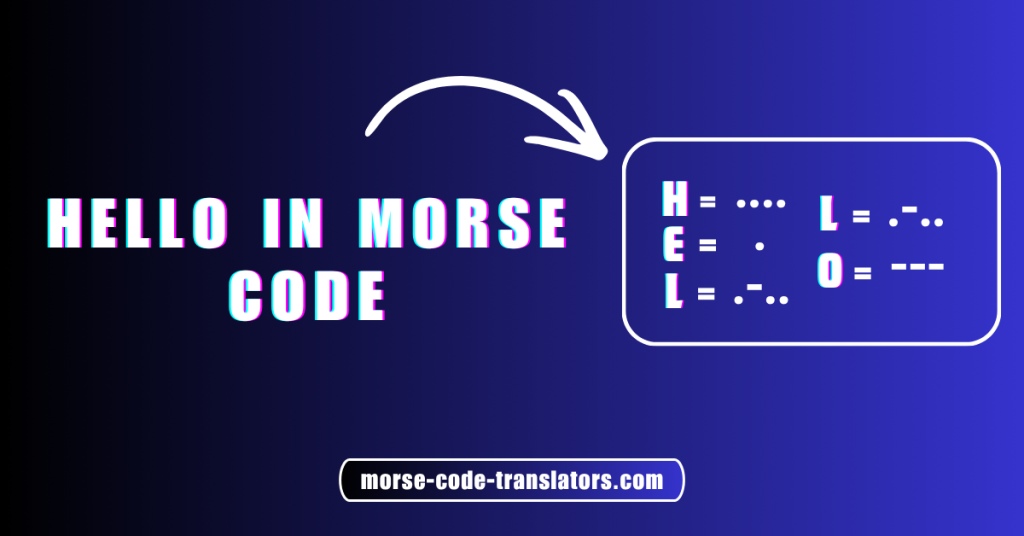
A great way to test your letter knowledge is by tapping out a simple hello in Morse code greeting.
Why Combining Sound and Visual Charts Doubles Your Learning Speed
Learning Morse code works best when you use both sound and visual charts together. Using only one method slows you down.
When you look at a chart, your brain creates a visual memory of the letter. When you listen to audio, your brain creates a sound memory of the same letter. When you combine both, you build two strong connections instead of one.
The correct way to practice is simple:
Play the audio for a letter, and at the same time follow the dot-dash pattern on the chart. Say the sound out loud as you follow it.
This means you are using:
- Eyes (visual chart)
- Ears (audio sound)
- Voice (speaking the pattern)
When all three work together, your brain learns faster and remembers longer. This is why learners who use both audio and charts improve much quicker than those who use only one method.Do not skip audio. Do not skip charts. Use both in every practice session.
Your Daily Morse Code Practice Plan Step by Step
Knowing Morse code is not enough. You need a simple daily routine that builds real memory without confusion or stress.
The Five-Step Practice Loop
Use this method every day. It takes about 10 minutes.
- Step one: choose one letter from your current learning group.
- Step two: Say the sound pattern out loud three times.
- Step three: close your eyes and try to say it from memory.
- Step four: write the dot and dash pattern without looking at the chart.
- Step five: check your answer. If it is correct, move to the next letter. If it is wrong, repeat from step two.
The Group-by-Four Daily Schedule
Day | Letters to Focus On |
Day 1 | E, T, A, N |
Day 2 | I, M, S, O |
Day 3 | U, R, D, G |
Day 4 | W, K, B, C |
Day 5 | Full revision of Days 1 to 4 |
Day 6 | F, H, J, L |
Day 7 | P, Q, V, X, Y, Z |
The Ten-Minute Daily Rule
Ten minutes every day beats two hours every weekend. Your brain consolidates memory during sleep. Short daily sessions give it something to process each night.
After five days of ten-minute sessions, most beginners recognise all beginner-group letters automatically. After two weeks, the full alphabet starts to feel familiar. After one month, decoding short words becomes natural.Consistency is the only shortcut that actually works.
Morse Code Speed Training How to Go From Slow to Automatic
Recognition and speed are two different skills. Build recognition first. Speed follows naturally.
The Three-Speed Training Method
- Slow speed: Listen to Morse audio at the slowest setting available. Focus only on identifying the letter correctly. Speed does not matter at this stage. Accuracy does.
- Medium speed: Once you can identify letters accurately at slow speed, increase to medium. Your brain begins recognising patterns before consciously processing them. This is the transition from decoding to recognising.
- Full speed :At full operating speed, you are not thinking. You are reacting. The sound comes in, and the letter appears in your mind automatically. This is the goal. This is what radio operators and pilots train toward.
Do not jump to full speed early. Every beginner who skips medium speed slows their own progress.
When Speed Naturally Arrives
Speed is not something you force. It is something that arrives when recognition becomes deep enough.
After enough correct repetitions, your brain stops treating Morse sounds as puzzles to solve. It starts treating them as familiar patterns to recognise. That transition happens automatically but only if you put in the daily repetition at slow and medium speeds first.
Real Places Where Morse Code Is Used Today
Morse code is an old way of sending messages using dots and dashes, but it is still useful today. It is kept as a backup and for special situations where simple communication works best.
Aviation Navigation Systems
Planes still use Morse code in navigation. Ground radio stations send short Morse signals with three letters. Pilots listen to these to make sure they are on the right route. Even with GPS, this system is kept as a backup for safety.
Maritime and Ocean Emergency Communication
Ships and submarines keep Morse code for emergencies. If modern systems stop working, they can still send signals like SOS. In some real cases, people have used flashlights to send Morse code when all other equipment failed.
Amateur Radio Networks Worldwide
HAM radio users still use Morse code every day. It is also called “CW” (continuous wave). Morse code can travel farther than voice signals, especially when the signal is weak. During disasters, it helps people communicate when phones and the internet are not working.
Assistive Communication Technology
People with serious physical disabilities use Morse code to communicate. They may use eye blinks, breathing, or small movements. Devices can turn these signals into text or speech. For many people, this is a simple and reliable way to communicate.
Military Backup Communication
Many armies still train soldiers in Morse code. If modern communication systems fail or are blocked, Morse code can still work. It is simple, dependable, and useful in tough situations.
Beginner Mistakes That Slow Down Morse Code Learning
Most people make the same mistakes. Knowing them in advance saves weeks of frustration.
Mistake | Why It Slows You Down | The Fix |
Memorising the chart visually | Visual memory fades fast | Switch to sound-first learning immediately |
Learning all 26 letters at once | Causes pattern confusion | Learn in groups of four to six letters |
Skipping audio practice | Builds no automatic recall | Pair every session with real Morse audio |
Counting dots and dashes | Too slow for real decoding | Train rhythmic recognition instead |
Studying only on weekends | Memory fades between sessions | Ten minutes every single day |
Moving to speed too early | Breaks recognition before it solidifies | Build accuracy at slow speed first |
Easy Memory Tricks to Remember Morse Code Forever
The Mirror Pair Method
Some Morse code letters are exact opposites, so you can learn them in pairs. For example, A is dot-dash and N is dash-dot. E is a single dot and T is a single dash. S is three dots and O is three dashes, which also forms SOS. When you learn one letter, the opposite one becomes easier to remember, saving time and effort.
Rhythm Phrase Association
Each Morse code letter has a rhythm, so you can match it with a simple word or phrase. The phrase does not need to be smart, it just needs to follow the same beat. For example, C is long-short-long-short and F is short-short-long-short. When you connect a rhythm to a word, your brain remembers it faster and you can recall the letter more easily.
Physical Tapping Practice
Practice Morse code by tapping with your finger, pencil, or on your knee. This helps because you use movement along with sound and sight. For example, tap S as di-di-di and O as DAH-DAH-DAH. Then try SOS together. Using sound, rhythm, and movement at the same time makes it much easier to remember and harder to forget.
Quick Revision Everything You Need to Remember
- Morse code is a sound system first, not just symbols
- Dots and dashes are only written forms of sound
- Every letter A to Z has one fixed pattern worldwide
- Sound-first learning is the fastest method
- “di” means dot, and “DAH” means dash
- Do not count dots and dashes, focus on listening
- Group learning is better than learning in order
- Start with simple 1–2 signal letters first
- Use mirror pairs to learn faster
- Practice 10 minutes daily for best results
- Regular short practice is better than long cramming sessions
- Always combine audio and chart together
- Using two methods (sound + visual) improves memory faster
- The goal is instant recognition without thinking
- Real fluency means hearing a sound and knowing the letter immediately
Final Thoughts
Morse code is simpler than it looks. You do not need special equipment or weeks of study. You just need ten minutes a day and the right method. Start with sound. Learn in small groups. Practice daily. The rhythm does the rest.
Every expert started exactly where you are right now. One letter. One sound. One step. Pick up E and T today and you are already on your way. The full alphabet is closer than you think.
Frequently Asked Questions
What is the Morse code alphabet?
It is a system where letters A to Z are changed into simple signals using dots and dashes. These signals can be sent with sound, light, tapping, or radio.
What is the fastest way to learn Morse code A to Z?
Learn by sound, not by reading. Use “di” for the short sound and “DAH” for the long sound. Practice a few letters every day for 10 minutes.
Which Morse code letter is easiest?
E is the easiest because it is only one short sound. T is also easy because it is only one long sound.
Is Morse code still used today?
Yes. It is still used in radio, aviation, military backup systems, and tools for disabled people to communicate.
Can I learn Morse code using sound only?
Yes. Listening is the best way to learn. Sound is faster and easier to remember than charts.
How long does it take to learn Morse code?
If you practice 10 minutes every day, you can learn the alphabet in 2 to 3 weeks.
What is SOS in Morse code?
SOS is di-di-di DAH-DAH-DAH di-di-di. It is an emergency signal used all over the world.