How to Learn Morse Code: Complete Step-by-Step Beginner Guide
Morse code is a simple way to send messages using dots and dashes. It may look confusing at first, but it is actually easy to learn with the right steps. Each letter and number has its own pattern, so you just need to understand and practice them slowly.
In this guide, you will learn how to learn Morse code in a very easy way. From basic rules to charts, tricks, and practice tips, everything is explained in simple language so beginners can start learning without any difficulty.
The best way to check if your tapping is accurate is to translate it back using our Morse Code Translators.
Why Learn Morse Code Today?
Morse code is still useful today, even in a world full of smartphones and internet. People learn it for many different reasons, not just for communication.
It is useful in emergency situations when there is no network or internet
It works without any device, using only sound, light, or tapping
It improves your memory, focus, and brain pattern recognition
It is a popular hobby in ham radio communication and aviation training
It helps you send secret messages that only you and your partner understand
The Complete Morse Code Alphabet and Numbers Chart
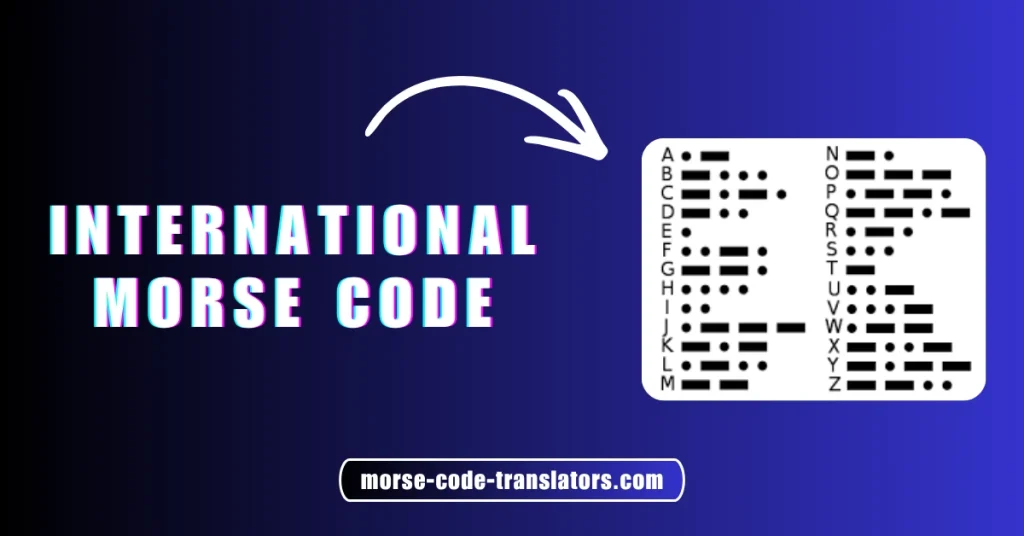
A–Z Morse Code Chart
Letter | Code |
A | .- |
B | -… |
C | -.-. |
D | -.. |
E | . |
F | ..-. |
G | –. |
H | …. |
I | .. |
J | .— |
K | -.- |
L | .-.. |
M | — |
N | -. |
O | — |
P | .–. |
Q | –.- |
R | .-. |
S | … |
T | – |
U | ..- |
V | …- |
W | .– |
X | -..- |
Y | -.– |
Z | –.. |
Number | Code |
0 | —– |
1 | .—- |
2 | ..— |
3 | …– |
4 | ….- |
5 | ….. |
6 | -…. |
7 | –… |
8 | —.. |
9 | —-. |
Common punctuation in Morse code
Morse code is not only for letters and numbers—it also includes punctuation marks so you can send complete messages.
- Period (.) = .-.-.- → used to end a sentence
- Comma (,) = –..– → used for pauses in a sentence
- Question mark (?) = ..–.. → used for asking questions
What Is Morse Code and How Does It Work?
Morse code is a simple communication system that uses dots (·) and dashes (−) to represent letters, numbers, and symbols. It was originally created to send messages over long distances using sound, light, or electrical signals.
Each letter in the alphabet has a unique pattern. By learning these patterns, you can read and send full messages using Morse code.
Dots, dashes and timing the basics
Morse code is not just about symbols, it is all about sound and timing. Every letter is made using a simple rhythm of short and long signals, which makes it easy to send messages even without speaking or writing.
- Dot (·) = a short signal (called “dit”)
- Dash (−) = a long signal (called “dah”), about 3 times longer than a dot
- Space between letters = a short pause so you know one letter has ended
- Space between words = a longer pause so you know a new word is starting
This timing system is what makes Morse code clear and readable. If you get the rhythm right, you can understand messages even without seeing them—just by hearing or tapping the pattern.
International Morse Code vs American Morse Code
There are two main versions of Morse code, but they are not used in the same way today.
- International Morse Code:This is the modern and worldwide standard. It is used in radio communication, aviation, and learning systems. It is simpler, more consistent, and easier for beginners to understand.
- American Morse Code:This is an older version used in early telegraph systems in the United States. It has more complex spacing rules and is rarely used today.
For beginners, International Morse Code is always recommended because it is the global standard, easier to learn, and works everywhere in modern communication systems.
How Long Does It Take to Learn Morse Code?
Learning Morse code is not difficult, but it depends on how much you practice every day. Most beginners can understand the basics in 2 to 4 weeks if they stay consistent. The key is not speed it is daily practice and repetition.
If you practice a little every day, you will slowly start recognizing patterns without even thinking. This is how real Morse code operators learn.
Learning timeline (Step-by-step beginner path)
Here is a simple and realistic learning plan:
- Week 1: Basic letters (E, T, A, N, I, S)
You start with the most common letters. These are very short and easy to remember. - Week 2: Full alphabet practice (A–Z)
You complete the full Morse code chart and start recognizing letters faster. - Week 3: Simple words practice
You begin reading and writing easy words like SOS, YES, NO, CAT, DOG. - Week 4: Sentences + speed building
You practice full sentences and start improving your speed using listening and tapping exercises.
After 4 weeks, you can already decode simple messages without help.
Speed levels (WPM Words Per Minute) explained
Morse code speed is measured in WPM (Words Per Minute). This shows how fast you can understand or send messages.
- Beginner: 5 WPM → You can slowly recognize letters
- Intermediate: 10–13 WPM → You can understand simple conversations
- Advanced: 20 WPM → Used in ham radio communication
- Expert: 30+ WPM → Professional-level speed used by trained operators
Step-by-Step Guide How to Learn Morse Code
Learning Morse code becomes easy when you follow the right steps in order. The key is to start simple, practice daily, and focus on sound instead of memorizing everything at once.
Learn sounds, not symbols
The most important rule is to listen first, read later. Morse code is based on sound patterns, not visual dots and dashes. Train your ear to recognize “dit” and “dah” instead of trying to memorize shapes.
Start with easy letters
Begin with the simplest and most common letters:
E, T, A, N, I, S
These are short and repeat often in real messages, so learning them first gives you quick progress and motivation.
Learn in pairs
Learning in opposites helps your brain remember faster:
- E (·) vs T (−)
- I (··) vs M (−−)
- A (·−) vs N (−·)
This method reduces confusion and builds strong memory connections.
Use the Farnsworth method
The Farnsworth method helps you learn faster without feeling overwhelmed. You hear each letter at normal speed but with longer gaps between letters. This gives your brain time to recognize patterns without slowing down real learning speed.
Build small words
Once you know a few letters, start forming simple words:
- SOS
- YES
- CAT
- DOG
This step is important because real learning happens when you start reading full words, not just letters.
Practice sending messages
Don’t just read Morse code send it too. You can tap it, write it, or use a Morse app. Sending helps build muscle memory and improves speed naturally.
Practice daily
Consistency is more important than long study sessions. Even 15 minutes every day is enough to improve quickly. Small daily practice builds strong long-term memory and fluency.
How to Teach Morse Code to Kids
Teaching Morse code for kids becomes very easy when you keep it fun, short, and interactive. Children learn best when they play games, hear sounds, and repeat patterns instead of memorizing rules.
Best age to start
Kids can start learning basic Morse code from around 6–7 years old. At this age, they enjoy simple games and can easily remember patterns like short and long sounds.
Fun learning methods
To make Morse code learning for children interesting, use playful activities:
- Singing or rhythm-based games
- Flashcards with dots and dashes
- Tapping games on hands or tables
- Simple storytelling with hidden Morse messages
These methods help kids understand Morse code basics without pressure.
Start with SOS
Begin with SOS (··· — ···) because it is the easiest and most famous Morse code signal. It is simple, repetitive, and easy to remember, making it the perfect first lesson in learning Morse code for beginners.
Best Ways to Learn Morse Code (By Learning Style)
The best way to learn Morse code is to match your study method with your learning style. This makes it faster to remember patterns and improves your overall Morse code learning speed.
Visual learners
If you learn best by seeing things, use:
- Morse code chart (A–Z alphabet)
- Flashcards with letters and codes
- Color-coded dot and dash patterns
This helps you quickly understand the Morse code alphabet using visual memory.
Audio learners
If you learn better by listening:
- Use Morse code sound apps
- Focus on hearing “dit” and “dah” patterns
- Practice without looking at the screen
This is one of the fastest ways to learn Morse code by sound because real communication is audio-based.
Hands-on learners
If you learn by doing:
- Tap Morse code on a table or hand
- Practice sending real messages
- Use rhythm-based repetition
This method builds strong muscle memory and improves Morse code practice speed naturally.
Memory Tricks for Morse Code
These simple tricks make it easier to memorize Morse code without stress.
Rhythm method
Each letter has a unique sound rhythm. Instead of memorizing dots and dashes, you learn the beat pattern of Morse code letters, which makes recall faster.
Here is a mnemonic word or phrase for every letter of the alphabet:
A ( · − ) — “a-LONE” — short then long, just like the code
B ( − · · · ) — “BIG-i-ty-bit” — one long then three short
C ( − · − · ) — “CHOC-o-LATE-please” — long short long short
D ( − · · ) — “DOG-gy-run” — one long then two short
E ( · ) — “eh” — just one short sound, the simplest letter
F ( · · − · ) — “did-it-WORK-out” — two short, one long, one short
G ( − − · ) — “GOOD-GAME-go” — two long then one short
H ( · · · · ) — “hid-den-in-it” four short sounds
I ( · · ) — “it-is” two short sounds
J ( · − − − ) — “just-THREE-LONG-ONES” one short then three long
K ( − · − ) — “KA-ra-TE” long short long
L ( · − · · ) — “a-LONG-short-short” short long short short
M ( − − ) — “MORE-TIME” two long sounds
N ( − · ) — “NO-no” long then short
O ( − − − ) — “OH-SO-SLOW” three long sounds
P ( · − − · ) — “a-PAUSE-PAUSE-now” short long long short
Q ( − − · − ) — “GOD-SAVE-the-QUEEN” long long short long
R ( · − · ) — “a-ROUND-trip” short long short
S ( · · · ) — “sim-ple-dit” three short sounds
T ( − ) — “TIME” just one long sound
U ( · · − ) — “un-der-GROUND” two short then one long
V ( · · · − ) — “vic-to-ry-SIGN” three short then one long
W ( · − − ) — “well-DONE-WELL” short then two long
X ( − · · − ) — “EX-it-it-NOW” long short short long
Y ( − · − − ) — “YES-it-IS-TRUE” long short long long
Z ( − − · · ) — “ZE-RO-hit-it” two long then two short
Shape method
Some codes visually resemble letters or patterns. This helps in building quick associations and improves Morse code memorization.
Mirror method
Many letters come in opposite pairs:
- E (·) vs T (−)
- A (·−) vs N (−·)
- I (··) vs M (−−)
This method helps you learn Morse code faster by connecting patterns instead of memorizing separately.
Fun Ways to Practice Morse Code
Practicing daily is the key to mastering Morse code learning quickly. These simple methods make practice fun and easy.
Daily word challenge
Learn one new word every day in Morse code. This builds strong memory and improves your Morse code vocabulary step by step.
Send secret messages
Use Morse code in chats or notes to send hidden messages. This makes learning more interesting and practical.
Tap during free time
Practice Morse code tapping while waiting, travelling, or watching TV. Small daily practice improves speed over time.
Phone notifications
Turn your phone alerts into Morse code sounds. This helps you learn patterns without extra effort.
Join online communities
Connect with other learners to practice real Morse code communication and improve faster through challenges.
Quick Summary of Morse Code Learning (Key Takeaways)
Learning Morse code becomes easy when you follow the right method. Here are the main points to remember:
- Morse code uses dots (·) and dashes (−) to represent letters
- It is best learned by listening to sound, not just reading symbols
- Start with a few simple letters before learning the full alphabet
- Daily 15 minutes practice is enough to improve quickly
- Timing and rhythm are the most important parts of learning
- Apps and charts make learning faster and easier for beginners
If you stay consistent, you can understand basic Morse code in just a few weeks.
Common Mistakes Beginners Make
Many people struggle with learning Morse code because they make simple mistakes at the start. Avoiding these can help you learn faster and remember better.
Learning by sight instead of sound
Many beginners try to learn Morse code by looking at dots and dashes on paper. This makes learning slow and confusing. Morse code is made to be heard, not just seen, so you should practice listening to “dit” and “dah” sounds from the beginning. When you train your ears, you can understand Morse code much faster in real situations.
Trying to learn all 26 letters at once
Some people try to learn the full Morse code alphabet in one day. This can feel overwhelming and hard to remember. It is better to start with a few easy letters like E, T, A, N, I, S and then slowly add more. Learning in small steps makes it easier to remember and builds confidence.
Practising irregularly
Practising once in a while is not enough to improve. Morse code needs daily practice to build memory and speed. Even 10–15 minutes every day is better than long but irregular study sessions. Regular practice keeps the patterns fresh in your mind.
Ignoring timing and spacing
Morse code is not only about dots and dashes, but also about timing. A dot is short, a dash is longer, and there are pauses between letters and words. If timing is wrong, the message becomes hard to understand. Good timing helps others understand your message clearly.
Giving up after the first week
Many beginners quit early because learning feels slow at first. This is normal because your brain is still learning new patterns. If you keep practicing daily, it becomes much easier after the first week. Staying patient is the key to becoming good at Morse code.
Conclusion
Learning Morse code is simple if you follow the right steps. Start with basic sounds, practice daily, and slowly build speed using charts, apps, and real messages. With consistency, anyone can learn Morse code and use it for communication, fun, or even secret messages.
Frequently Asked Questions
How long does it take to learn Morse code?
Usually 2–4 weeks with daily practice.
Is Morse code hard to learn?
No, it is simple with practice.
Can I learn Morse code in one day?
Only basics, not full fluency.
What is the fastest way to learn Morse code?
Use sound training + Farnsworth method.
Can I learn Morse code without apps?
Yes, you can learn Morse code without apps using charts, books, or practice with tapping and sound. However, apps make learning faster and easier.
What is the easiest way to memorize Morse code?
The easiest way is to learn by sound patterns, start with simple letters, and practice daily using small words like SOS, YES, and CAT.
Can kids learn Morse code?
Yes, from age 6–7.
Do I need equipment?
No, apps are enough.
Is Morse code still used today?
Yes, in aviation, radio, and emergency systems.