Help in Morse Code: Exact Translation & Survival Guide
Knowing how to ask for help can save your life in a dangerous situation. But what if you have no phone signal, no internet, or no way to speak? This is where Morse code becomes very useful.
With just a few simple signals, you can send a clear message that anyone can understand. In this guide, you will learn how to use Morse code to signal for help, what SOS means, and how to send it using light, sound, or tapping in real-life situations.
Rescue operations rely on your signals following the strict rhythmic timing of international Morse code. You can practice broadcasting emergency text by using the audio feature on our Morse Code Translators.
What Is Morse Code?
Morse code is a communication system invented in the 1830s by Samuel Morse and Alfred Vail. It represents letters, numbers, and words using just two signals a short dot (·) and a long dash (−).
Originally transmitted through electrical telegraph wires, Morse code later moved to radio, light, and sound. Its biggest strength is simplicity: you need zero equipment to use it. Any surface, any light source, and any sound-making object becomes a communication tool.
Today it remains active in amateur radio, aviation navigation, military training, and accessibility technology and in survival situations where every other system has failed.
What Is "Help" in Morse Code?
HELP ME is the fuller distress phrase. Here is the complete letter-by-letter breakdown:
Letter | Morse Code | Sound Pattern |
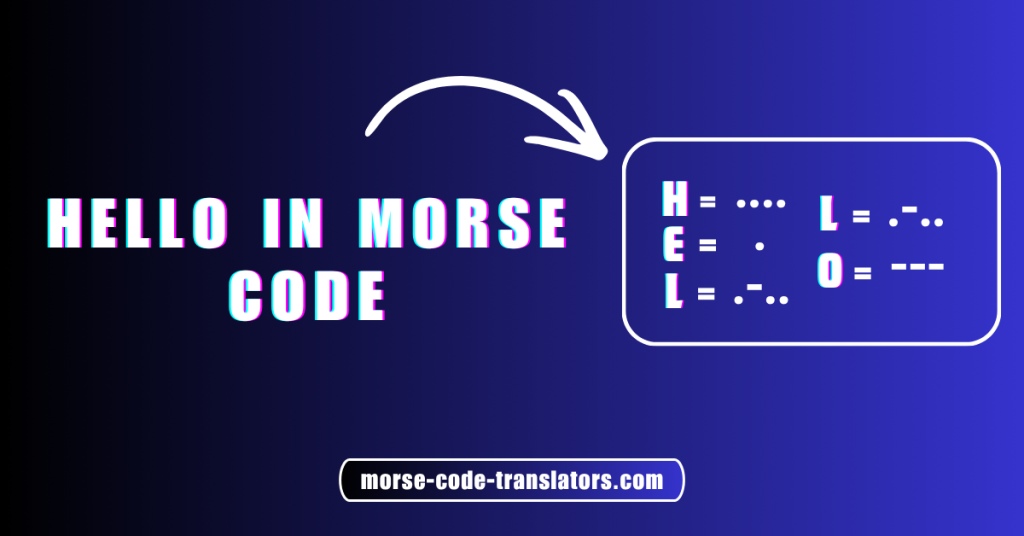
H | · · · · | dit dit dit dit |
E | · | dit |
L | · − · · | dit dah dit dit |
P | · − − · | dit dah dah dit |
(word gap) | 7-unit pause | — |
M | − − | dah dah |
E | · | dit |
Complete signal: · · · · / · / · − · · / · − − · (pause) − − / ·
Total signals: 15 signals across 6 letters.
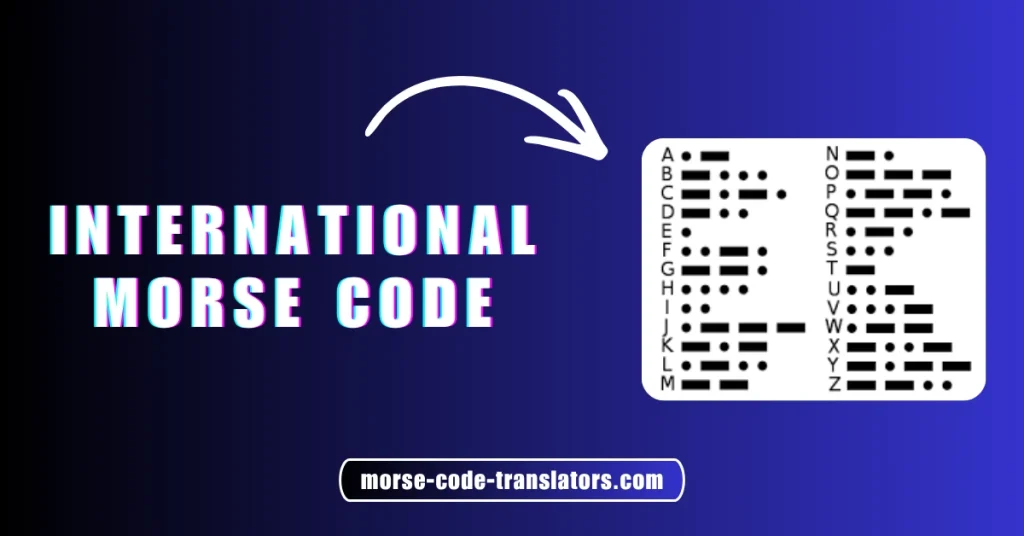
To provide more details about your situation, you will need to know the Morse code alphabet A to Z.
When to Use "Help Me" Instead of "HELP"
Situation | Use |
Fast emergency, maximum stress | HELP |
Communicating with nearby Morse operator | HELP ME |
Written signal in sand or snow | HELP ME (clearer intent) |
Amateur radio contact | HELP ME |
“Help Me” takes longer to send in Morse code because it has more signals. Use it only when you have enough time and the other person knows Morse code well. In emergencies, SOS is better because it is faster and easier to understand.
Timing Rules for Sending "Help" Correctly
Element | Duration |
Dot (·) | 1 time unit |
Dash (−) | 3 time units |
Gap between signals (same letter) | 1 time unit |
Gap between letters | 3 time units |
Gap between words | 7 time units |
Wrong timing is the single biggest reason distress signals fail. A rushed H (· · · ·) sounds like random tapping. A properly timed H has clear, equal-length dots with distinct gaps.
Transmitting your exact location or map coordinates requires a firm understanding of Morse code numbers.
HELP vs SOS: Which One to Use?
Situation | Use This |
Official international emergency | |
Radio communication with a trained operator | HELP or SOS |
Signaling someone nearby who knows Morse | HELP |
Learning and practice | HELP (better for learning letter structure) |
Fastest signal to repeat under stress | SOS (no letter breaks, continuous pattern) |
Key Takeaways
- SOS is the fastest emergency signal
- HELP has 13 total signals
- You can send HELP using sound, light, or tapping
- Timing and spacing are very important
- Practice makes it easy to remember
Why SOS Is Faster in True Emergencies
SOS (· · · − − − · · ·) is sent as one continuous sequence with no word gap. It has no letter boundaries to remember under panic. It is globally recognized by rescuers, mariners, and pilots without any language barrier.
- HELP, while meaningful in English, requires the receiver to know Morse code letters. SOS requires only that they recognize the pattern.
- Rule of thumb: If your life depends on it, send SOS. If you are communicating with someone who knows Morse, send HELP.
Common Mistakes When Sending "Help"
Mistake 1: Rushing the letter H H is four dots, not three. Beginners often send only three in panic. Count deliberately: 1, 2, 3, 4.
Mistake 2 :Dropping the E E is a single dot and easy to skip. If you forget it, HELP becomes HLP — unreadable.
Mistake 3 : Wrong pause length between letters Without a clear 3-unit pause between H-E-L-P, all 13 signals blur into one long sequence that no one can decode.
Mistake 4 :Confusing L and P
- L = · − · · (dash in position 2)
- P = · − − · (dashes in positions 2 and 3) Practice these two as a pair until they feel distinct.
- Mistake 5 : Inconsistent dash length A dash must be exactly 3× the length of a dot. If your dashes are too short, they sound like dots and the entire message collapses.
How to Send “Help” in Morse Code
Using Sound (Tapping or Knocking)
Short tap = dot
Long tap (3× longer) = dash
Brief pause between signals in the same letter
Longer pause between letters
The Morse code for HELP is:
H = · · · ·
E = ·
L = · − · ·
P = · − − ·
So the rhythm becomes:
tap-tap-tap-tap (pause) tap (pause) tap-HOLD-tap-tap (pause) tap-HOLD-HOLD-tap
You can use a rock, pipe, metal surface, table, or even a wall. Any hard surface works because sound travels better through solid objects.
Try to keep your tapping slow and clear. If you tap too fast, the other person may not understand the message. Repeat the pattern again and again so rescuers can notice it. If possible, pause after each full “HELP” message so the pattern is easier to identify.
Using Light (Flashlight or Mirror)
Short flash = dot
Long flash = dash
This method is very useful at night, in dark places, or during power cuts. A flashlight, phone torch, or even a camera flash can be used to send signals.
In daytime, you can use a mirror or shiny object. By reflecting sunlight, you can send visible signals over long distances. These flashes can sometimes be seen from hills, buildings, or even rescue helicopters.
Always flash slowly and clearly. Do not move the light too fast or randomly. Aim your light toward open space or the horizon where rescuers are most likely to look. Repeat the HELP pattern many times until someone responds.
Using a Whistle or Horn
Short blast = dot
Long blast = dash
A whistle or horn is one of the best tools for sending help signals because sound travels far, especially in open areas. It is very useful in forests, mountains, or fog where visibility is low.
You can use a survival whistle, sports whistle, or even a car horn. The key is to keep the pattern clear and not mix fast and long sounds randomly.
Try to take small pauses between each letter so the pattern of HELP can be understood. Keep repeating the signal at regular intervals instead of blowing continuously. This gives rescuers time to recognize the pattern.
Written or Drawn Signals
You can also write Morse code in places where it can be seen from above. Good surfaces include sand, snow, mud, rocks, or open ground.
- · · · / · / · − · · / · − − ·
Make sure dots are small and dashes are longer so the difference is very clear. If everything looks the same size, it becomes hard to understand.
Write the message in a large size so it can be seen from a distance or from the air. If possible, repeat it in more than one place. This increases the chance of being noticed by rescue teams. You can also use stones, sticks, or footprints to form the pattern if you cannot write.
Memory Tricks for Each Letter in "HELP"
- H = · · · ·
- Four quick dots. Remember: “H has four quick heartbeats.” Tap four times fast.
- E = ·
- The simplest letter in all of Morse code just one dot. Remember: “E is easy one tap.”
- L = · − · ·
- One dot, one dash, two dots. Remember: “L goes up then comes back down” short, long, short, short.
- P = · − − ·
- One dot, two dashes, one dot. Remember: “P is a bridge short, two long spans, short.”
Practice HELP as a full rhythm: fast-fast-fast-fast / fast / fast-slow-fast-fast / fast-slow-slow-fast
When and Why People Still Use "Help" in Morse Code
Knowing Morse code is not enough. You need a simple daily routine that builds real memory without confusion or stress.
Survival situations
Hikers, sailors, and climbers have used Morse light signals to attract search aircraft when radios failed. A flashlight signal is visible up to 16 km at night under clear conditions.
Underground or enclosed spaces
Miners and trapped workers have tapped Morse on pipes to communicate location and condition to rescuers above. Sound travels through steel pipes at over 5,000 m/s far faster and farther than voice.
Maritime emergencies
Before digital EPIRB beacons, Morse was the primary distress method on ships. The ITU officially retired mandatory maritime Morse in 1999, yet many sailors still learn it as a critical backup when electronics fail.
Accessibility tools
People with severe mobility limitations use Morse-based input systems to type messages with a single switch. In 2018, Google added a Morse code keyboard to Android directly enabling distress communication for millions of users with disabilities.
Amateur radio
Over 750,000 licensed ham radio operators in the United States alone use Morse during emergency drills and real disaster communication, including during hurricanes and earthquakes when all other infrastructure collapses.
How to Practice "Help" in Morse Code
- Step 1: Learn Each Letter Separately
Practice H, E, L, P individually until each feels automatic.
- Step 2 :Combine Into the Full Word
Say it aloud rhythmically: “dit dit dit dit — dit — dit dah dit dit — dit dah dah dit”
- Step 3 :Tap on a Surface
Short tap = dot. Long press = dash. Do this 10 times daily for one week.
- Step 4 : Test Yourself
Write HELP in Morse from memory without looking. Check your answer. Repeat until you get it right three times in a row.
- Step 5 : Practice Under Simulated Stress
Try sending HELP while walking, in the dark, or with background noise. Real emergencies are rarely calm.
Final Thoughts
HELP in Morse code is a simple but powerful emergency signal. It can be sent using sound, light, or tapping when no phone or internet is available.
Practice it for a few minutes daily so you can use it instantly in real emergencies.
Frequently Asked Questions
What is "help" in Morse code?
HELP in Morse code is · · · · / · / · − · · / · − − · — four letters totaling 13 signals.
What is "help me" in Morse code?
“HELP ME” is · · · · / · / · − · · / · − − · (word pause) − − / ·. It adds M (− −) and E (·) with a clear pause between words.
Is HELP or SOS better in an emergency?
SOS is better in a real emergency because it is faster, easier to recognize, and known worldwide. HELP is useful when communicating with someone who understands Morse code letters.
How many signals does "help" have in Morse code?
HELP has 13 signals in total: H (4) + E (1) + L (4) + P (4).
Can I send "help" with a flashlight?
Yes, you can use a flashlight. A short flash = dot and a long flash = dash. It works best at night or in low light and can be seen from far away if done clearly.
How do I remember the Morse code for HELP?
Use rhythm: “four quick one short-long-short-short short-long-long-short.” Practice tapping it daily to remember it easily.
What is the difference between H and E in Morse code?
H = · · · · (four dots)
E = · (one dot)
They are the simplest letters, which makes HELP start very fast.
Is Morse code still used today?
Yes, it is still used in amateur radio, aviation, emergency communication, and assistive technology for people with disabilities.