SOS Morse Code: How to Send and Recognize the Ultimate Distress Signal
SOS is the most well-known Morse code signal in the world. It is simple, clear, and used in real emergencies. In this guide, you will learn what SOS means, how it works, and how you can send it using simple methods, even without any device. You can simulate the light flashes and audio tones for this signal directly on our Morse Code Translators page.
What Is SOS in Morse Code?
SOS is a distress signal made of dots and dashes in Morse code.It is used to ask for immediate help in dangerous or life-threatening situations.
SOS Code Pattern
SOS = · · · — — — · · ·
Sound = di-di-di DAH-DAH-DAH di-di-di
Important Fact
SOS does NOT stand for “Save Our Souls” or “Save Our Ship.”
It was chosen because it is simple and easy to recognise
It is a universal emergency signal used worldwide
How to Send SOS in Any Situation
SOS can be sent through sound, light, physical marks, or tapping. You do not need any technology. You do not need training. You just need to understand the pattern.
How to Send SOS Without Any Device
You do not need a radio to send an SOS. In an emergency, you can use almost anything around you.
Method | What to Do | Good For |
Phone torch or flashlight | 3 short flashes, 3 long flashes, 3 short flashes | Signalling aircraft or ships at night |
Mirror or shiny surface | Reflect sunlight in the same 3-3-3 pattern | Open land, desert, or at sea during daytime |
Whistle | 3 short blasts, 3 long blasts, 3 short blasts | Forests, mountains, or small spaces |
Tapping on metal | 3 short taps, 3 long taps, 3 short taps | Trapped in a building, mine, or ship |
Three fires | Light 3 fires in a triangle or straight line | Open ground visible from aircraft |
Ground markings | Spell SOS with rocks or logs at least 3 metres tall | Beaches, fields, or snow seen from the air |
Shouting | 3 short shouts, 3 long shouts, 3 short shouts | When someone is nearby but cannot see you |
Remember: Always repeat the signal again and again. Do not send it just once. Rescuers need to hear or see it multiple times to find your exact location.
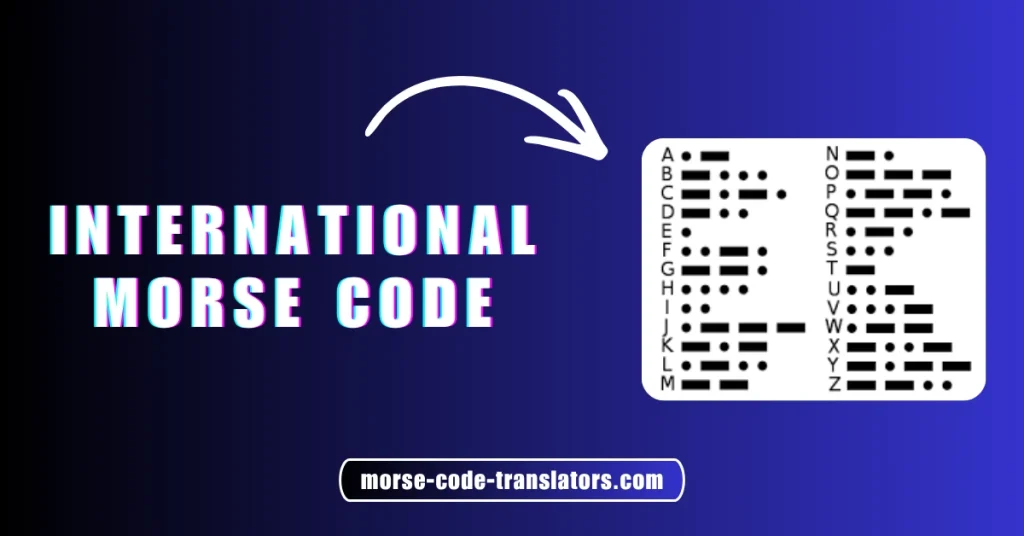
The signal is famously made up of three dots and three dashes, representing characters from the Morse code alphabet A to Z.
Sending SOS by Sound
Three short sounds. Three long sounds. Three short sounds. Then pause and repeat.
You can do this by tapping on a hard surface. By knocking on a wall or hull. By blowing a whistle three times short, three times long, three times short. By pressing a button on a radio transmitter. By beeping a car horn.
The key is consistency. The long sounds must be clearly three times longer than the short sounds. That contrast is what makes the signal recognisable.
Sending SOS by Physical Marks
If you are stranded in an open area and cannot transmit a signal, create the letters SOS in large, visible marks on the ground.
Use rocks, logs, clothing, or any material that contrasts with the ground surface. Make the letters as large as possible, at least three metres tall if you can. Aircraft flying overhead will recognise the pattern. Remember that SOS reads the same upside down. That symmetry makes it perfectly suited for aerial recognition from any direction.
Sending SOS by Light
Three short flashes. Three long flashes. Three short flashes. Pause and repeat.
Use a torch, a phone screen, a signal mirror, or any light source you can switch on and off. This method is particularly effective at night over long distances. The same timing rules apply. Short flashes are brief. Long flashes are three times longer. Keep the rhythm steady.
Sending SOS by Tapping
If you are trapped and cannot move, use tapping to signal. Three quick taps. Three slow taps. Three quick taps.
Tap on a pipe, a wall, the floor, or any surface that might carry sound to rescuers. This method has been used by people trapped in collapsed buildings to signal their location to rescue teams.
If you spend time outdoors, we highly recommend reading our guide on how to learn Morse code for basic emergency prep.
How SOS Works in Morse Code
SOS is not just letters it is one continuous signal.
Structure of SOS
- S = three short signals (· · ·)
- O = three long signals (— — —)
- S = three short signals (· · ·)
Important Rule
- SOS is sent without gaps between letters
- It is treated as one full emergency signal
Mastering this distress call is the first rule of how to signal help in Morse code.
The Real History of SOS Morse Code
What Came Before SOS The CQD Problem
Before SOS existed, ships in distress used a signal called CQD. This was introduced in 1904 by the Marconi International Marine Communication Company. CQ was a general call meaning all stations listen. D was added to indicate distress.
The problem was that CQD was not universally understood. Different countries used different distress signals. A ship in danger sending CQD might not be understood by a vessel from another country. Confusion costs time. Time costs lives.
The world needed one universal signal. One that every operator in every country would recognise immediately.
How SOS Became the Global Standard
The German government made the first move. In April 1905, they introduced SOS which they called the Notzeichen signal, in their national maritime radio regulations. The dot-dot-dot dash-dash-dash dot-dot-dot pattern was chosen specifically because it was simple, symmetrical, and unmistakable.
In November 1906 the first International Radiotelegraph Convention met in Berlin. Representatives from countries around the world signed an agreement that made SOS the official global distress signal. That agreement came into effect on 1 July 1908.
The Titanic and the Moment SOS Became Famous
SOS was first used in a real emergency in 1909 by the American steamship SS Arapahoe after its propeller shaft broke in the Atlantic Ocean. The signal worked. Help arrived.
But it was the Titanic disaster in April 1912 that made SOS famous worldwide. The Titanic initially sent CQD the old signal, before switching to SOS. Both signals were sent during the disaster. After the Titanic tragedy, the world fully committed to SOS as the single universal standard. No confusion. No alternatives. One signal for every nation and every vessel.
When SOS Was Officially Retired And Why It Still Exists
SOS remained the official maritime radio distress signal for nearly a century. In 1999 it was replaced by the Global Maritime Distress and Safety System — a digital automated system that handles emergency communication far faster than manual Morse code.
But SOS was never abolished. It remains a recognised international distress signal that can be used through any signalling method in any emergency. It is still taught to pilots, sailors, soldiers, and survival instructors worldwide.
Because it relies on the standardized international Morse code system, it is understood by rescuers worldwide.
The Exact SOS Pattern Timing and Structure
How the Pattern Works
SOS follows very simple timing rules.
- Dot = short sound (1 unit)
- Dash = long sound (3 units)
- Small gap = between signals
In SOS, there are no big gaps between letters. It is sent as one continuous signal so it stays clear and strong.
How SOS Sounds Out Loud
SOS sounds like this:
di-di-di DAH-DAH-DAH di-di-di
- First: 3 short sounds
- Then: 3 long sounds
- Then: 3 short sounds
This simple pattern makes SOS very easy to hear and recognise, even in difficult situations.
SOS vs Mayday: What Is the Difference?
Many people confuse SOS and Mayday. They are both distress signals, but they work differently.
- SOS is a Morse code signal. It is transmitted through dots and dashes by sound, light, or tapping. It is a visual and auditory pattern, not a spoken word.
- Mayday is a spoken voice distress signal. It comes from the French phrase m’aider, meaning help me. It was adopted in 1927 as the radio voice equivalent of SOS, something that could be spoken clearly over audio radio when Morse code was not practical.
When you have a working radio, you say Mayday three times, followed by your details. When you have no working radio or need to signal without speech, you use SOS.
Both signals mean the same thing: I am in grave danger, and I need immediate help right now.
Real Emergencies Where SOS Morse Code Saved Lives
The Titanic 1912
The most famous use of SOS in history. After striking an iceberg, the Titanic’s radio operators sent both CQD and SOS repeatedly into the night. The RMS Carpathia picked up the signal and changed course immediately, rescuing over 700 survivors. Without the signal, no rescue would have been possible in time.
The Drumbeat Yacht 1997
During an ocean sailing race, the yacht Drumbeat lost all electronic systems in a storm. With no radio and no GPS, the crew used a flashlight to send an SOS in Morse code to a passing vessel. The signal was recognised. The crew was rescued. No technology required, just a light and the knowledge of three dots, three dashes, three dots.
Jeremiah Denton 1966
During the Vietnam War, captured US Navy pilot Jeremiah Denton was forced to appear in a televised interview by his captors. He could not speak freely. So he blinked. In Morse code, he blinked the word TORTURE with his eyes, confirming to US intelligence that prisoners of war were being mistreated. It was not SOS, but it proved that Morse code knowledge can be used for communication even when every other option has been taken away.
Earthquake Survivors
In multiple documented cases, survivors of building collapses have used tapping to signal rescue teams below the rubble. Three quick taps, three slow taps, three quick taps the universal pattern that search teams around the world are trained to recognise. The knowledge of this simple sequence has helped locate survivors who would otherwise not have been found.
Why SOS Works Better Than Any Other Emergency Signal
Recognition and speed are two different skills. Build recognition first. Speed follows naturally.
It Is Perfectly Designed for Noise and Distance
The SOS pattern uses only the shortest signal, one dot, and the longest signal, one dash. There is nothing in between. That extreme contrast makes it the easiest pattern to distinguish from background noise, static, and interference.
Any signal that could be confused with something else is dangerous in an emergency. SOS cannot be confused with anything else. That was the design intention. It was achieved completely.
It Requires No Language
SOS works in every language. It requires no shared vocabulary. No translation. No interpretation. Any trained operator anywhere in the world hears dot-dot-dot dash-dash-dash dot-dot-dot and knows exactly what it means.
That universality is irreplaceable. In a crisis involving people from multiple countries, one shared signal cuts through every language barrier instantly.
It Works Without Technology
Modern distress systems, GPS beacons, satellite phones, and digital emergency alerts all require working technology and power. SOS requires neither. A rock. A flashlight. A whistle. A fist to tap with. That is all you need. When technology fails, and in emergencies it often does, SOS still works.
It Is Simple Enough to Remember Under Pressure
Three short. Three long. Three short.
Under extreme stress, the human brain struggles to remember complex information. SOS is so simple that it can be recalled and executed by someone who is panicking, injured, exhausted, or in the dark. That psychological simplicity is not an accident. It was central to why this pattern was chosen over every alternative.
How to Remember SOS Forever
You will never forget SOS once you hear it. Say this out loud right now:
“dit dit dit — dah dah dah — dit dit dit”
Short short short — long long long — short short short.
That is it. That is the signal that has crossed oceans, passed through jungle walls, bounced off the moon, and brought rescue teams running for over 100 years. Three dots. Three dashes. Three dots.
Use the audio player in the Morse code translator above to hear exactly how SOS sounds then try tapping it out on your desk. Once you feel that rhythm in your fingers, you will never lose it.
Final Thoughts
Most people will never need to send SOS. But in an emergency, a simple signal can save a life: three short, three long, three short.
It costs nothing to learn and needs no device. Say it once, tap it once: di-di-di DAH-DAH-DAH di-di-di and you will never forget it.
Frequently Asked Questions
Is SOS actually an acronym?
No. SOS does not officially stand for anything. “Save Our Souls” and “Save Our Ship” were added later as memory tricks.
Do you pause between the S and the O in SOS?
No. SOS is sent as one continuous signal. Small pauses are okay, but the pattern should stay clear.
Can anyone use SOS or is it only for professionals?
Anyone can use SOS in a real emergency. But never use it as a joke because it can waste rescue resources.
What replaced SOS as the official maritime signal?
Modern systems like GMDSS are now used, but SOS is still recognised everywhere as a backup signal.
Can someone send SOS without knowing Morse code?
Yes. You only need to remember: 3 short, 3 long, 3 short. That is enough.
How do rescuers know it is a real SOS?
A real SOS is repeated again and again in a clear pattern. Random signals are usually not consistent.
Is SOS the same as Mayday?
Both mean emergency. SOS is used with light, sound, or tapping. Mayday is spoken on the radio.