Hello in Morse Code: Exact Translation & Sound Guide
Imagine you are far from help no phone, no internet, only a flashlight. You need to get someone’s attention. The first thing in Morse code is often a simple greeting, and “hello” is one of the most useful.
“Hello” has five letters, and each one has its own Morse pattern. Together, they create a clear rhythm that becomes easy to recognize once you hear it.
In this guide, you will learn how to write and say “hello” in Morse code, how to send it using light, sound, or tapping, and simple tricks to remember it easily.
You can listen to the exact audio rhythm of this greeting by playing it on our Morse Code Translators.
Hello in Morse Code The Exact Translation
The Morse code for Hello is: …. . .-.. .-.. —
That is the complete sequence. Every dot and dash here is precisely defined by the ITU (International Telecommunication Union) international standard the same standard used by radio operators, pilots, maritime crews, and emergency services worldwide.
Here is how each letter of Hello breaks down individually:
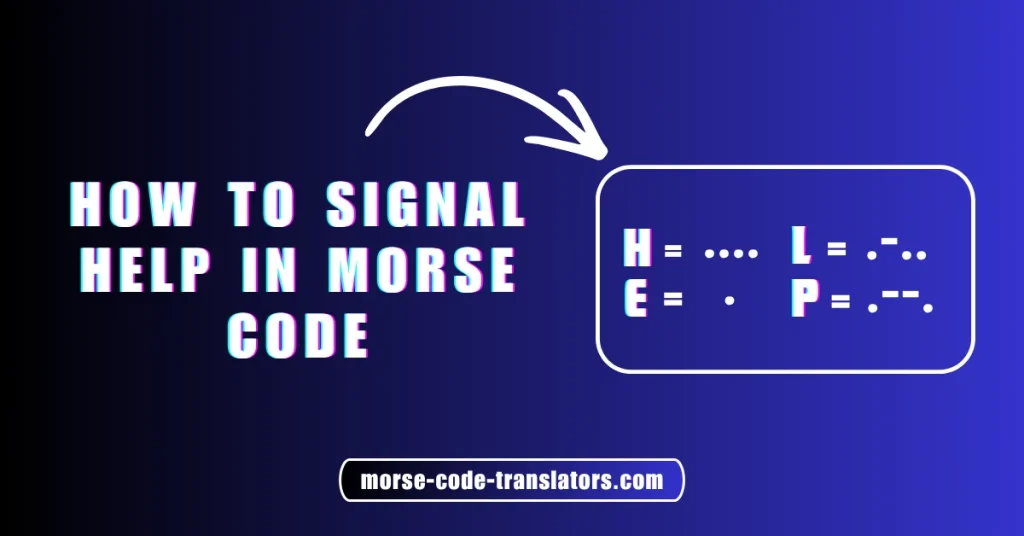
H = …. (four dots) E = . (one dot) L = .-.. (dot, dash, dot, dot) L = .-.. (dot, dash, dot, dot — identical, repeated) O = — (three dashes)
When written as a full word with proper spacing between each letter, Hello in Morse code looks like this:
…. . .-.. .-.. —
In the spoken dit/dah system used by professional operators, Hello sounds like this:
dit-dit-dit-dit / dit / dit-dah-dit-dit / dit-dah-dit-dit / dah-dah-dah
The slash marks here represent the three-unit pause between letters. In actual transmission, those pauses are as important as the signals themselves they are what separates one letter from the next.
How to Transmit Hello Using a Flashlight
Visual Morse code is one of the most practical real-world applications of this skill. A flashlight, a signal lamp, a phone torch, or even reflected sunlight can all carry a Morse message over significant distances without any electronic communication infrastructure.
Short flash = dot Long flash = dash Dark pause between flashes within a letter = 1 unit Dark pause between letters = 3 units
Flashing Hello Letter by Letter
H: four quick flashes of equal short duration, then a pause. E: one quick flash, then a pause. L: one short flash, one long flash, two short flashes, then a pause. L: repeat short, long, short, short, then a pause. O: three long flashes of equal duration.
Practical Flashlight Tips
Face your light source directly toward the receiver. Aim with precision scattered light is harder to read. Keep your flashes clean and deliberate: short flashes should be obviously shorter than long ones. The contrast between a dot-flash and a dash-flash must be clearly visible to the receiver.
In daylight, a signal mirror works more effectively than a flashlight. In darkness, even a small flashlight is visible at remarkable distances military signal lamps using this principle have been read from several miles away under the right conditions.
This method is genuinely useful in outdoor emergencies, camping scenarios, or survival situations. If you know Hello in Morse code by flashlight, you can signal for help or establish contact with another person at distance with nothing more than a standard torch.
Why “Hello” Is the Perfect First Word to Learn in Morse Code
Most Morse code guides start with single letters like E or T. That helps for basic practice, but when you want to learn your first full word, “Hello” is one of the best choices and here’s why.
- It teaches multiple letters at once: “Hello” uses five letters (H, E, L, L, O), so you learn real word structure instead of isolated symbols.
- It gives smart repetition: The letter L appears twice, which helps your brain remember it faster through natural repetition.
- It covers different signal types:
- H = all dots
- O = all dashes
- E = single signal
- L = mixed pattern
This gives you a full range of Morse code styles in one word.
- It is actually useful in real life: “Hello” is a real greeting you would use when starting communication, so you are learning something practical, not random practice.
- It is easier to remember: Words with meaning stick in your memory much better than random letter drills.
- It builds a strong foundation: Once you know “Hello,” you are close to learning other important words like “Hi,” “Help,” and “SOS” because you already know most of the letters.
Letter-by-Letter Breakdown of Hello in Morse Code
Understanding each letter on its own is the key to truly knowing the word not just memorizing a string of dots and dashes.
H in Morse Code — ....
H is represented by four consecutive dots: ….
In sound, this is dit-dit-dit-dit four quick, equal-length signals with no gap between them. H is one of the easiest letters in Morse code to recognize precisely because it is so uniform. Four dots, nothing else. When you hear a rapid four-beat pattern, that is almost certainly an H.
Signal count: 4 Pattern type: All dots no dashes
E in Morse Code — .
E is the simplest character in all of International Morse Code: a single dot. Just one signal. Dit.
This makes complete sense from a design standpoint. E is the most frequently used letter in the English language, so Morse code gives it the shortest possible encoding. Every millisecond saved on E adds up across thousands of transmissions. Efficient design built right into the alphabet.
Signal count: 1 Pattern type: Single dot
L in Morse Code — .-..
L is where the word Hello gets more interesting. The pattern is dot, dash, dot, dot or in spoken form, dit-dah-dit-dit.
Notice the structure: it opens with a short signal, then a long signal, then two short signals. This gives L a distinctive rhythmic shape that makes it recognizable by ear. Many learners describe it as sounding like “a little” — dit-DAH-dit-dit. Once you hear it that way, L is hard to forget.
Signal count: 4 (1 dot + 1 dash + 2 dots) Pattern type: Mixed dot, dash, dot, dot
Since Hello contains two L letters back to back, you will hear this pattern twice in a row with a three-unit pause between them. That pause is critical without it, the two L letters would blur into a completely different, unreadable sequence.
O in Morse Code — ---
O closes Hello with three long dashes: —
In sound, this is dah-dah-dah three long, equal signals. Like H, O is a uniform pattern, but on the opposite end of the spectrum. Where H is all dots (short), O is all dashes (long). This contrast makes O one of the easiest characters to learn, and also one of the most satisfying to transmit.
Signal count: 3 Pattern type: All dashes no dots
O is also part of the most famous Morse signal in history: SOS (… — …). If you can recognize O, you already know a crucial piece of that distress signal.
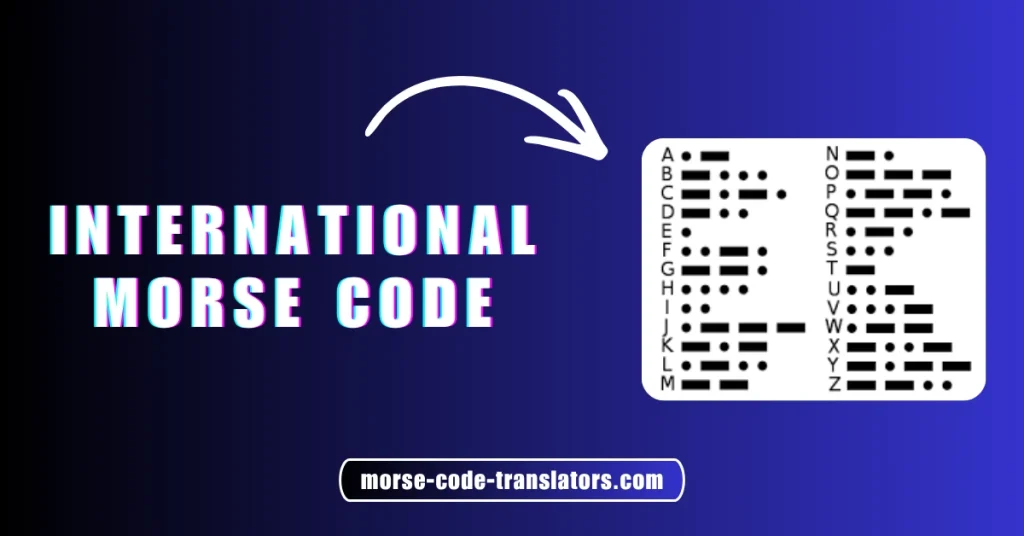
To spell this out yourself, you just need to learn the ‘H’ and ‘E’ from the Morse code alphabet A to Z.
How to Say “Hello” in Morse Code Using Sound
Sound is the most traditional and widely used way to send Morse code. It is used in radio communication, HAM radio, and real-life emergency signaling. You can send it using a beeper, radio key, tapping sound, or even simple voice beeps.
Step-by-Step Sound Transmission of “Hello”
To send “Hello” using sound, follow this pattern carefully:
- H: dit dit dit dit → short beep repeated 4 times, then pause
- E: dit → one short beep, then pause
- L: dit dah dit dit → short, long, short short pattern, then pause
- L: dit dah dit dit → repeat the same pattern again, then pause
- O: dah dah dah → three long beeps
Each letter must be separated by a clear pause so the message stays readable.
Tips for Sound Practice
- Start slowly so you don’t rush the rhythm. Correct timing is more important than speed.
- Use a Morse code app or metronome to keep a steady pace while learning.
- Focus on listening first try to recognize “Hello” by ear before trying to send it.
- Record your practice and listen back to check if the timing is correct.
- Aim for instant recognition: when you hear …. . .-.. .-.. —, you should immediately understand it means “Hello” without thinking letter by letter.
After you nail your greetings, try learning something more advanced like I love you in Morse code
How to Tap Hello in Morse Code
Tapping is perhaps the most universally available transmission method for Morse code. You need no equipment at all beyond your own hand and any solid surface. This is why tapping has historically been used in mine collapses, prison communications, and survival situations where no tools were available.
Tapping Hello on Any Surface
H: tap four times quickly, all equal length, then pause. E: one short tap, then pause. L: short tap, long tap, short tap, short tap, then pause. L: repeat the same pattern, then pause. O: three long taps, all equal length.
Getting the Tapping Rhythm Right
The single biggest mistake beginners make when tapping Morse is losing the distinction between dots and dashes. A dash should be noticeably, deliberately longer than a dot not just slightly longer. If the difference is subtle, your receiver will misread your transmission.
The Timing Rules That Make “Hello” Readable
- Inside a letter (1 unit gap): Short pause between dots and dashes so each letter stays clear and does not mix together.
- Between letters (3 units gap): Medium pause that separates each letter in “Hello” so you can clearly hear where one letter ends and the next begins.
- Between words (7 units gap): Long pause used to separate words in a sentence, making messages easy to understand even in noisy conditions.
- Dot and dash timing: A dot is 1 unit and a dash is 3 units, creating a consistent rhythm that helps the brain recognize patterns quickly.
- Why timing matters: Without correct timing, Morse code becomes unreadable the gaps are just as important as the signals themselves.
- Learning tip: Practicing with correct timing from the start helps you learn faster than memorizing symbols alone.
How to Blink Hello in Morse Code
Blinking is the most private and equipment-free method of transmitting Morse code. It requires absolutely nothing beyond your eyes and a receiver who knows the code. This method has genuine life-saving applications most famously used by people with paralysis or locked-in syndrome to communicate when no other method was possible.
Short blink = dot Long blink (held open or closed longer) = dash
Blinking Hello
H: four short blinks, then pause. E: one short blink, then pause. L: short blink, long blink, short blink, short blink, then pause. L: repeat, then pause. O: three long blinks.
When Blinking Morse Code Actually Matters
In 1966, US Navy pilot James Stockdale was shot down over Vietnam and held as a prisoner of war for over seven years. During that time, prisoners at the Hanoi Hilton used tapping and other covert Morse methods to communicate between cells and maintain morale, coordinate resistance, and share information all without their captors knowing. Blinking was used during interrogations to secretly signal other prisoners.
This is not a historical curiosity. It is a reminder that Morse code is not just a hobby skill it is a survival communication system that has worked in some of the most extreme human circumstances imaginable.
Hello in Morse Code Across Different Languages
International Morse Code is the same everywhere in the world. The dots and dashes do not change. Only the words from different languages are converted into Morse code.
Here is how “Hello” or similar greetings look in different languages:
- Spanish:Hola: …. — .-.. .-
- French:Bonjour: -… — -. .— — ..- .-.
- German:Hallo: …. .- .-.. .-.. —
- Italian: Ciao: -.-. .. .- —
- Portuguese: Olá: — .-.. .-
- Japanese (Konnichiwa): -.- — -. -. .. -.-. …. .. .– .-
- Arabic (Marhaba): — .- .-. …. .- -… .-
You can see that some words look similar in Morse code. For example, “Hello” and “Hallo” both start with H (….), so they begin the same way.
This shows why Morse code is special. It works for many languages because the system is universal and does not change from country to country.
Memory Tricks to Remember Hello in Morse Code
Rote memorization is the slowest and least effective way to learn Morse code. These memory techniques are used by experienced operators and instructors to make patterns stick faster.
The Rhythm Trick
Speak Hello out loud in its dit/dah form and listen to the rhythm:
dit-dit-dit-dit / dit / dit-dah-dit-dit / dit-dah-dit-dit / dah-dah-dah
Say it as a musical phrase, not as individual sounds. Many learners notice that it has a natural rhythmic feel almost like a simple percussion pattern. Clap it out. Tap it on your leg. Hum it. The moment your body knows the rhythm, your brain will follow.
The Visual Pattern Trick
Look at each letter’s pattern and notice what makes it visually distinct:
H is four identical dots pure short signals, no variation. E is one dot the shortest character in all of Morse code. L looks like a “long in the middle” pattern short, LONG, short, short. O is three identical dashes pure long signals, the mirror opposite of H.
H and O are visual opposites: one is all-short, one is all-long. This contrast makes them natural anchors. Once you know H and O, the other letters of Hello fill the space between them.
The Story Trick
Create a short mental story that maps to the pattern of the word. One example that works for many learners:
H “here, here, here, here” (four taps, calling attention) E “I” (one quick acknowledgment) L “am (PAUSE) calling you” (the dah in the middle stands out) L repeat “am (PAUSE) calling you” O “hello-o-o” (the three long dashes feel like a drawn-out vowel)
The more vivid and personal your story, the better it will work. Memory techniques based on narrative are significantly more effective than pure repetition for pattern-based learning.
Hello vs. Hi What Is the Difference in Morse Code?
A natural question for anyone learning greetings in Morse code is: what is the difference between Hello and Hi? They mean roughly the same thing in conversation, but in Morse code they are very different to transmit.
Hi in Morse code is: …. .. That is H (four dots) followed by I (two dots) a total of six signals.
Hello in Morse code is: …. . .-.. .-.. — That is five letters with a total of sixteen signals.
Hello is significantly more complex than Hi. It introduces three additional letters E, L, and O and requires far more timing discipline to transmit accurately. This is actually why Hello is so valuable for learning: it contains a wider variety of patterns than Hi does.
Hi gives you only dots two uniform letters. Hello gives you all-dot patterns (H, E), a mixed pattern (L), and an all-dash pattern (O). In one five-letter word, you encounter three completely different types of Morse character. That variety makes Hello one of the best training words for beginners, not in spite of its complexity but because of it.
Mistakes to Avoid When Sending “Hello” in Morse Code
Merging the Two “L” Letters
Beginners often forget to pause between the two Ls in “Hello.” Without a clear 3-unit gap, the signals merge and become hard to read. Always separate repeated letters clearly.
Equal Timing for Dots and Dashes
A common error is making dots and dashes too similar. A dash must always be three times longer than a dot, or the message becomes confusing.
Rushing the Letter “O”
Since O is three long dashes (—), beginners often rush it. Each dash should be slow, equal, and clearly separated.
Ignoring the Letter “E”
E is just one dot, but it still needs to be sent clearly. It should not be skipped or rushed, and must be followed by a proper pause before the next letter.
Practical Uses of “Hello” in Morse Code
Knowing how to send “Hello” in Morse code is not just a fun skill it has real uses in communication, safety, and learning.
Amateur Radio Starting a Conversation
In amateur (HAM) radio, operators often begin contact by sending greetings. Saying “Hello” in Morse code (CW) is a simple way to start a conversation and is commonly used during first radio contacts. It helps both operators confirm they are connected.
Emergency Signaling Getting Help
In emergencies, “Hello” can be sent using a flashlight, mirror, or tapping to attract attention. A clear Morse pattern shows that the signal is intentional, not random, which can help rescuers recognize that someone is trying to communicate.
Assistive Communication Helping People Speak
For people who cannot speak or move easily, Morse code is sometimes used as a communication tool. “Hello” is often one of the first words practiced because it helps users start basic communication and build confidence.
Learning and Teaching First Step for Beginners
“Hello” is also a great teaching tool. It is easy to recognize, fun to send, and includes different Morse patterns in one word. This makes it perfect for introducing Morse code to beginners in a simple and practical way.
Conclusion
“Hello” in Morse code is …. . .-.. .-.. —. It is a simple beginner word made of five letters and sixteen signals, and it is one of the easiest ways to start learning International Morse Code.
You can send it using sound, light, tapping, or blinking, and it always means the same thing a basic human greeting and connection. Learning “Hello” helps you quickly move on to important Morse code words like Hi, Help, and SOS.
Frequently Asked Questions
What is Hello in Morse code?
Hello in Morse code is …. . .-.. .-.. —. H is four dots, E is one dot, L is dot-dash-dot-dot, L repeats, and O is three dashes.
How many signals are in Hello in Morse code?
Hello contains 16 signals in total: 4 for H, 1 for E, 4 for the first L, 4 for the second L, and 3 for O.
How do you say Hello in Morse code out loud?
You say it like this: dit-dit-dit-dit / dit / dit-dah-dit-dit / dit-dah-dit-dit / dah-dah-dah, with short pauses between each letter.
Is Hello the same in Morse code in all languages?
No. Morse code changes based on letters in each language. Some greetings look similar, but they are not always identical across languages.
What is the difference between Hello and Hi in Morse code?
Hi is …. .., which is very short. Hello is …. . .-.. .-.. —, which is longer and includes more patterns, making it better for practice.
Can I send Hello in Morse code without any equipment?
Yes. You can send it using tapping, blinking, light flashes, sound, or even your voice. No special tools are needed.
How long does it take to memorize Hello in Morse code?
Most people can memorize it in about 10 minutes. With a few days of practice, it becomes automatic and easy to recognize.
Is Hello a good first word to learn in Morse code?
Yes. It is one of the best beginner words because it is simple, useful, and includes different Morse patterns in one word.
What comes after Hello in Morse code learning?
After Hello, good next words are Hi, Help, and SOS. These are short, practical, and commonly used in real situations.
Why does Morse code use “dit” and “dah” instead of dots and dashes?
Because “dit” and “dah” are sounds you can speak and recognize easily by ear. This helps train listening skills instead of visual memorization.