Yes in Morse Code: Pattern, Sound & Easy Guide
If you have ever wondered how to say YES in Morse code, the answer is simple: -.– . …. It is made of three letters Y, E, and S using a mix of dots and dashes.
YES is a useful and easy word to learn in Morse code. You can send it using sound, light, or taps. Whether you are a beginner or just curious, learning YES in Morse code is a great way to start. Start practicing your patterns and translating custom messages instantly by visiting the main Morse Code Translators tool.
What Is YES in Morse Code?
YES in Morse code is written as:
-.– . …
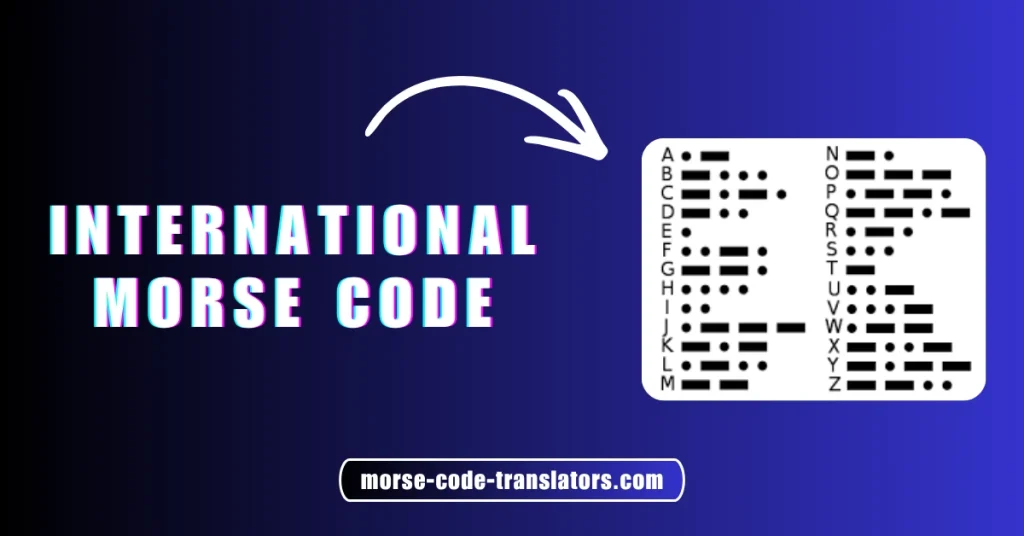
Each letter is encoded separately using the International Morse Code standard. Here is the full breakdown:
Letter | Morse Code | Pronunciation |
Y | -.– | dah-dit-dah-dah |
E | . | dit |
S | … | di-di-dit |
Combined: -.– . … pronounced “dah-dit-dah-dah dit di-di-dit”
Quick Tip: In Morse code pronunciation, “dit” is used for the final dot in a letter to signal that the letter has ended, while “di” is used for dots in the middle.
Breaking Down Each Letter of YES
The Letter Y in Morse Code (-.--)
Y is one of the more complex letters in the Morse Code alphabet. It consists of four signals:
- Dash (dah)
- Dot (dit)
- Dash (dah)
- Dash (dah)
Pattern: -.–
Y was designed to have a longer, distinctive pattern because it is a less frequently used letter in English. Morse code was cleverly engineered so that common letters get short codes (like E = .) while rarer letters get longer ones making the whole system faster to use in practice.
The Letter E in Morse Code (.)
E is the simplest character in the entire Morse code system just a single dot.
Pattern: .
This makes sense because E is the most frequently used letter in the English language. Samuel Morse and Alfred Vail analyzed letter frequency when designing the code, ensuring that the most common letters would be fastest to transmit. A single tap, and you have transmitted E.
The Letter S in Morse Code (...)
S is represented by three consecutive dots.
Pattern: …
S is also famous for its role in the universal distress signal SOS (… — …), making it one of the most recognized patterns in Morse code history. Three short taps clean, simple, and easy to identify even through heavy static.
Expand your transmission vocabulary beyond letters by learning the structured five-symbol patterns for Morse code numbers.
How to Say YES in Morse Code
Method 1 Sound (Tapping or Beeping)
The most traditional way to transmit YES is through sound. Here is the rhythm:
- Y: Long tap → Short tap → Long tap → Long tap (pause)
- E: Short tap (pause)
- S: Short tap → Short tap → Short tap
Timing Rules
- A dot lasts 1 unit
- A dash lasts 3 units
- Pause between signals (same letter): 1 unit
- Pause between letters: 3 units
- Pause between words: 7 units
You can practice by tapping on a table, using a pencil, or knocking on a wall.
Method 2 Light Signals (Flashlight or Mirror)
YES can also be sent using light. Short flashes = dots, long flashes = dashes.
- Y: Long flash → Short flash → Long flash → Long flash (pause)
- E: Short flash (pause)
- S: Short flash → Short flash → Short flash
Where This Is Useful
This method works well in survival situations, maritime signaling, or long-distance communication using light.
Method 3 Radio Transmission (CW Mode)
In amateur radio, Morse code is sent using CW (Continuous Wave).
- Send -.– for Y → pause
- Send . for E → pause
- Send … for S
Key Facts
- CW uses very low bandwidth (~150 Hz)
- It works over long distances, even with low power
- Widely used by ham radio operators
Method 4 Written / Visual Display
In written form, YES in Morse code looks like:
-.– . …
Or using symbols:
−·−− · ···
Where You See This
This format is common in learning guides, translators, training manuals, and even jewelry designs where Morse code is used as a hidden message.
Prepare for real-world emergencies by understanding exactly how to signal help in Morse code using flashlights or audio devices.
Is Morse Code Still Used Today?
Morse code is still used today. It is not outdated many people still learn and use it for communication, hobbies, and emergencies.
Amateur (Ham) Radio
Many radio operators around the world use Morse code (CW mode). It helps them communicate over long distances, even with simple equipment.
Emergency and Disaster Communication
When phones and the internet stop working, Morse code can still send messages. The distress signal SOS (… — …) is known worldwide and can save lives.
Military Use
Some military teams still learn Morse code as a backup. It works without modern technology, which makes it useful in difficult situations.
Aviation
Pilots sometimes use Morse code signals from radio beacons to check their location, especially if other systems fail.
Accessibility Technology
Morse code helps people with disabilities communicate using simple signals like taps, blinks, or switches. Even basic words like YES can be sent easily.
How to Learn YES in Morse Code Fast
Learn the Sound First (Most Important)
To learn YES in Morse code quickly, focus on the sound, not just the symbols. Your brain remembers rhythm faster than visual patterns. Instead of memorizing -.– . …, train your ear to hear the pattern:
- Y = dah-dit-dah-dah
- E = dit
- S = dit-dit-dit
This approach is called the Koch Method, one of the most effective ways to learn Morse code fast.
Master the Timing Rules
Clear Morse code depends on correct timing. Every mistake usually comes from bad rhythm.
- Dot (·) = 1 unit
- Dash (—) = 3 units
- Gap within a letter = 1 unit
- Gap between letters = 3 units
- Gap between words = 7 units
Think of it like this: a dot is short, a dash is 3× longer, and you pause slightly between letters. Practicing 15–20 minutes daily will quickly improve your speed and accuracy.
Practice YES (-.-- . ...) Step-by-Step
Now apply what you learned and practice the full word YES in Morse code:
- Y: long – short – long – long
- (pause)
- E: short
- (pause)
- S: short – short – short
Repeat this pattern at least 5 times daily to build strong muscle memory and recognition.
Practice Using Different Methods
To remember YES in Morse code faster, practice using different methods. This helps your brain learn through multiple senses.
- Tapping: Tap on a table or wall
- Flashlight: Use short and long flashes
- Whistling: Make short and long sounds
- Blinking: Use eye signals
For example, when tapping: tap long–short–long–long for Y, pause, tap short for E, pause, then tap short–short–short for S. You can practice anytime even without tools.
Use Free Tools & Apps to Learn Faster
Using online tools can speed up your learning. Many Morse code apps let you hear YES in Morse code at real speed, which is the fastest way to train your ear.
Look for tools that offer:
- Audio playback
- Practice mode
- Instant feedback
These tools make learning Morse code for beginners simple, fast, and effective.
Morse Code Timing Chart for YES
Signal | Type | Duration |
– | Dash (Y) | 3 units |
. | Dot (Y) | 1 unit |
– | Dash (Y) | 3 units |
– | Dash (Y) | 3 units |
(letter gap) | Pause | 3 units |
. | Dot (E) | 1 unit |
(letter gap) | Pause | 3 units |
. | Dot (S) | 1 unit |
. | Dot (S) | 1 unit |
. | Dot (S) | 1 unit |
YES vs. Other Common Morse Code Words
Word | Morse Code | Total Signals |
YES | -.– . … | 9 signals |
NO | -. — | 6 signals |
OK | — -.- | 7 signals |
… — … | 9 signals | |
HI | …. .. | 6 signals |
YES is a particularly good learning word because it uses three different letters (Y, E, S) that each have distinct patterns helping you practice variety right from the start. Send a secret, affectionate message to someone special by learning how to properly tap I love you in Morse code.
Fun Facts About YES in Morse Code
- E is the shortest letter in Morse code (single dot) no coincidence that it sits at the heart of YES
- Y has one of the more complex patterns (-.–) because it is a less frequently used letter in English
- S appears in SOS the world’s most recognized distress signal making it one of the first patterns many people learn
- YES in Morse code takes under 2 seconds to transmit at an average speed
- K-pop artists have been known to use Morse code to hide messages in songs and social media posts so learning YES puts you ahead of the fan decoding game
- Morse code jewelry featuring the word YES is extremely popular as a gift, especially for engagement and anniversary occasions
Speed up your memorization process with helpful mnemonics and audio exercises found in our guide on how to learn Morse code.
Conclusion
YES in Morse code (-.– . …) is simple but powerful. It is just three letters and nine signals, yet it represents a clear and confident message.
From old telegraph systems to modern use in radio, survival, and learning, Morse code still matters today. You can send YES using taps, light, sound, or even blinking anywhere, anytime.
Start practicing now. Three letters, nine signals and you are already learning a global language.
Frequently Asked Questions
What is YES in Morse code?
YES in Morse code is -.– . … — made of Y (-.–), E (.), and S (…). It is pronounced as dah-dit-dah-dah dit di-di-dit.
How do you pronounce YES in Morse code?
You say it as: “dah-dit-dah-dah (pause) dit (pause) di-di-dit.”Here, “dah” = dash (long signal) and “dit/di” = dot (short signal).
Is YES in Morse code the same worldwide?
Yes. International Morse Code is standardized by the ITU, so YES (-.– . …) is the same in every country.
Can I send YES in Morse code without equipment?
Yes. You can send it using taps, light flashes, eye blinks, or sound. Morse code works with any method that can create short and long signals.
How long does it take to learn YES in Morse code?
Most people can learn the pattern in 15–30 minutes. With daily practice, you can send and recognize it easily within a few weeks.
What is the difference between YES and SOS in Morse code?
- YES: -.– . … (separate letters with pauses)
- SOS: …—… (one continuous emergency signal)