J in Morse Code: The Complete Guide to Sending, Hearing, and Remembering It
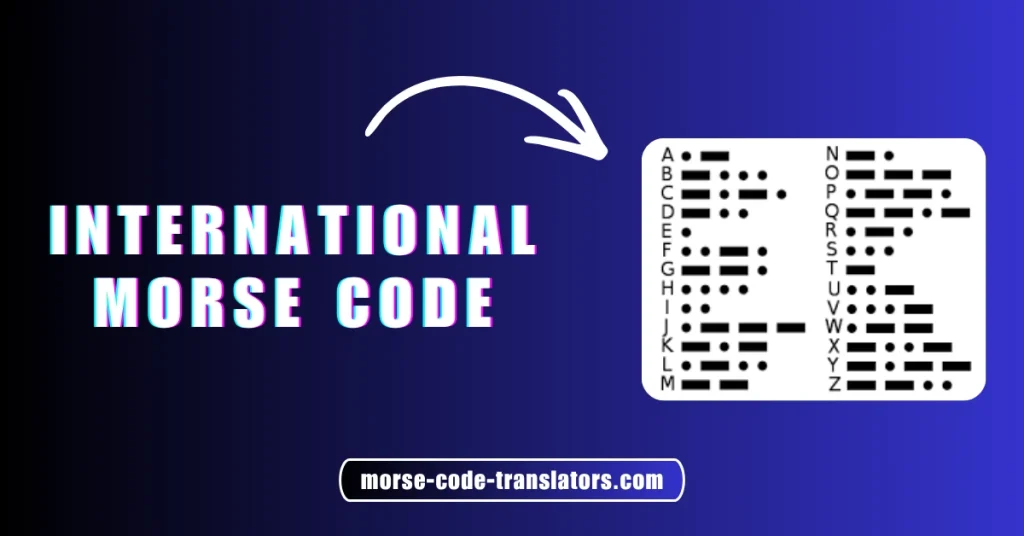
Quick answer: The letter J in Morse code is dot-dash-dash-dash, written as .—. It’s one of the longer single-letter patterns in the entire International Morse Code alphabet, made up of one short signal followed by three long ones.
This guide covers exactly how J is formed, how it sounds and looks, easy ways to memorize it, and where it shows up in real-world Morse code use from amateur radio to distress signaling. Instantly convert text to Morse code and practice your audio comprehension by visiting the main Morse Code Translators homepage.
What Is J in Morse Code?
The Dot-Dash Pattern for J
J is represented as one dot followed by three dashes (.—). In spoken Morse terminology, this is read aloud as “dit-dah-dah-dah.” It’s one of only a handful of letters in the International Morse Code standard that uses four total signal elements, making it visually and audibly distinct from shorter letters like E (a single dot) or T (a single dash).
How J Sounds When Transmitted
When sent over radio or a practice oscillator, J produces a short beep followed by three noticeably longer beeps in a row: dit, dah, dah, dah. Because three dashes in a row are uncommon among the 26 letters, J has a rhythm that’s fairly easy to recognize once you’ve heard it a few times, even before you’ve fully memorized the whole alphabet.
J in the International Morse Code Standard
Morse code used today follows the International Morse Code standard maintained by the International Telecommunication Union (ITU), which standardized timing and letter patterns worldwide so operators in different countries could understand each other’s transmissions. J’s pattern (.—) has been part of this standardized alphabet since international unification in the late 19th and early 20th centuries.
Master every letter from A to Z to build a solid foundation by reading our complete guide on the Morse Code Alphabet A to Z.
How to Remember J in Morse Code
Mnemonic: "Just One Dot, Then Dashes Galore"
A simple way to lock in J’s pattern is to remember that it starts with the shortest possible signal (one dot) and then flips completely to the longest possible run of dashes among common letters (three in a row). Thinking of J as “one short, three long” separates it clearly from similar-looking letters.
Comparing J to Similar Letters
- J (.—) one dot, three dashes
- P (.–.) dot, dash, dash, dot
- W (.–) dot, dash, dash (only three total signals, not four)
Comparing J side-by-side with W and P helps prevent a common beginner mix-up, since all three share a similar opening dot-dash rhythm before diverging.
Practice by Tapping It Out
Many learners find it easier to remember Morse letters by physically tapping the rhythm one short tap, then three long taps rather than only reading the dots and dashes on a page. Combining the visual pattern with a physical or audible rhythm tends to make the letter stick faster in memory.
Learn the exact timing and history behind the world’s most recognized distress signal in our breakdown of SOS Morse Code.
Where J in Morse Code Is Actually Used
Amateur (Ham) Radio Communication
Morse code, often called “CW” (continuous wave) in amateur radio circles, is still actively used by licensed ham radio operators around the world. The letter J appears regularly in call signs, station identifiers, and general conversation exchanged over CW frequencies.
Scouting, Signal Corps, and Educational Use
Morse code, including individual letters like J, is still taught in contexts such as Scouting programs, military signal history education, and hobbyist code-practice communities, often as a way to build discipline, memory skills, or an appreciation for early telecommunications history.
Nautical and Maritime Signaling
Historically, Morse code played a major role in maritime communication, including signal lamps and early radiotelegraphy at sea. While most modern maritime distress communication has shifted to satellite and digital systems, Morse code including letters like J remains part of maritime heritage, training, and backup signaling knowledge.
Expand your vocabulary beyond letters by learning the distinct five-symbol patterns in our guide to Morse Code Numbers.
Speed up your ham radio communications by learning the fastest way to confirm a message with Yes in Morse Code.
The History Behind Morse Code and the Letter J
Origins With Samuel Morse and Alfred Vail
Morse code takes its name from Samuel Morse, who worked alongside Alfred Vail to develop a system of electrical signals for the telegraph in the 1830s and 1840s. Vail is widely credited with refining much of the original letter-to-signal mapping, including assigning longer, more complex patterns like J’s to less frequently used letters in English text.
Why J Has a Longer Pattern
In the original telegraph system, letters that appeared more often in everyday English like E and T were assigned the shortest signals to speed up transmission, while less common letters such as J, Q, and X received longer, more complex patterns. This efficiency-driven design is why J’s four-element pattern (.—) is longer than high-frequency letters like E or T.
From American Morse to International Morse
The original version used in early American telegraphy differed slightly from the version used internationally today. When operators across different countries needed a single shared standard, the International Morse Code was formalized, and J’s pattern of one dot and three dashes became the version recognized worldwide.
Master one of the easiest and most frequently used letters in the alphabet by reading our guide to S in Morse Code.
Key Takeaway
J in Morse code is written as .— and spoken as “dit-dah-dah-dah” one short dot followed by three long dashes. Its distinctive four-element pattern, longer than many other letters, traces back to the original telegraph design principle of giving shorter codes to common letters and longer ones to less frequent letters like J.
Whether you’re learning Morse code for amateur radio, historical interest, or general curiosity, remembering J as “one short, three long” is the simplest way to keep it straight from similar letters like P and W.
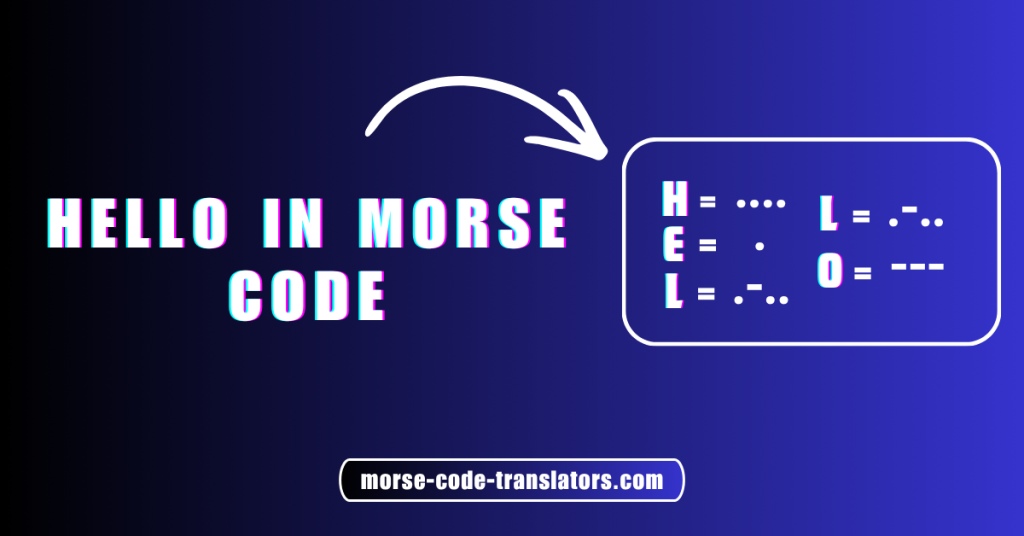
Start your transmissions off right by learning the standard greetings in our guide to saying Hello in Morse Code.
Frequently Asked Questions
What Is the Morse Code Symbol for J?
The Morse code symbol for J is .— — one dot followed by three dashes.
How Do You Say J in Morse Code Out Loud?
J is spoken as “dit-dah-dah-dah,” representing its one short and three long signal elements in sequence.
Is J One of the Harder Letters to Learn in Morse Code?
Many beginners find J moderately challenging at first because of its three consecutive dashes, but its distinctive rhythm actually makes it easier to recognize by ear once it’s been practiced a few times.
Does J Look Similar to Any Other Morse Code Letters?
J’s closest visual relatives are P and W, since all three begin with a dot-dash combination, though J is unique in following that opening with two additional dashes.
Is Morse Code Still Used Today?
Yes. While it’s no longer the primary method of global communication, Morse code remains actively used by amateur radio operators, is taught in various hobbyist and historical education settings, and is occasionally used as a backup or emergency signaling method.